How to Choose the Right Career Path Based on Your Skills and Interests
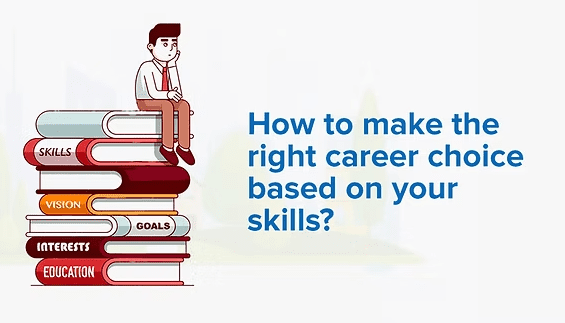
How to choose the right career path based on your skills and interests. This question can feel like a life-sized puzzle with missing pieces. The pressure to “figure it out” clashes with endless options and the fear of making a wrong turn. But the most fulfilling careers aren’t found by following a crowd; they are built intentionally at the intersection of what you’re good at, what you love, and what the world needs. This guide offers a clear, actionable framework—complete with self-assessment tests and real-world examples—to help you cut through the noise and design a career path that feels authentic, sustainable, and exciting for your future.
The Career Sweet Spot: Where Skill, Passion, and Demand Meet
Imagine three overlapping circles:
-
SKILLS: What you are good at (your natural talents and learned abilities).
-
INTERESTS: What you enjoy (activities that energize you and topics you’re curious about).
-
MARKET DEMAND: What the world values and pays for.
Your ideal career exists where all three circles overlap. A job in only the “Skills & Demand” zone is stable but unfulfilling. A passion in the “Interests” only zone is a hobby. The Sweet Spot is where you can build a profitable passion.
Phase 1: The Self-Discovery Audit (Know Thyself)
Grab a notebook. This is a data-gathering mission about YOU.
A. Map Your SKILLS (The “Good At” List)
Don’t be modest. Reflect on the feedback you’ve received and the tasks that come easily to you.
-
Hard Skills: Technical, teachable abilities (Data Analysis, Writing, Public Speaking, Graphic Design, Coding, Accounting, Project Management).
-
Soft Skills: Interpersonal and thinking abilities (Problem-solving, Leadership, Empathy, Teamwork, Creativity, Adaptability).
-
Exercise: List 10 things you are reliably good at. Ask 2-3 people who know you well: “What would you say are my top 3 strengths?”
B. Map Your INTERESTS (The “Enjoy” List)
Forget about careers for a moment. Think about pure enjoyment.
-
What topics could you read about or watch videos on for hours?
-
What kind of work makes you lose track of time?
-
What problems in your community or the world bother you enough that you’d like to help solve them?
-
Exercise: List 10 activities or subjects that genuinely excite you. No judgment.
C. Find the Patterns & Overlaps
Now, look for connections between your two lists. This is where potential careers are born.
-
Example Pattern: You’re good at explaining complex things (Skill), and you enjoy video games and tech (Interest). Overlap Idea: Technical Writer, Game Journalist, IT Trainer.
-
Example Pattern: You’re good at organizing events (Skill), and you enjoy fashion and art (Interest). Overlap Idea: Event Planner for Galleries, Fashion Show Coordinator.
Phase 2: The Reality & Market Test (Validate Your Ideas)
Take your “overlap ideas” and pressure-test them in the real world.
Research Questions to Answer:
-
Are there actual jobs? Search for your overlap titles on LinkedIn, Jobberman, and Ngcareers.
-
What’s the earning potential? Check salary ranges on Glassdoor and in job ads.
-
What’s the future growth? Is this a growing field? (e.g., Renewable Energy, Data Science, Cybersecurity, Digital Marketing).
-
What’s required to start? Do you need a degree, a certification (like Google Analytics, AWS, PMP), or a portfolio?
Use These Research Tools:
-
Informational Interviews: Find someone on LinkedIn with your dream job. Send a polite, short message asking for 15 minutes to learn about their career path. This is the best intel you can get.
-
Job Shadowing/Volunteering: Offer to spend a day with a professional or volunteer in the field to see the day-to-day reality.
Phase 3: The Low-Risk Experiment (Try Before You Commit)
You don’t have to quit your job or change your major. Run a small, safe experiment.
-
Take a Short Course: Enroll in a low-cost course on Coursera, Udemy, or YouTube on a relevant skill. Does the subject keep you engaged?
-
Do a Freelance Gig: Use a skill from your overlap on a site like Upwork or Fiverr, or do a pro-bono project for a friend’s business.
-
Start a Micro-Project: Create a small blog, build a simple website, analyze a public dataset, or design a sample product. The process will teach you more than any theory.
Phase 4: Make Your Decision & Build a Plan
Based on your audit, research, and experiments, narrow your focus to 1-2 serious contenders.
Create Your Career Action Plan:
-
Target Role: Be specific. (e.g., not “tech,” but “Frontend Developer” or “Product Manager”).
-
Skills Gap: What do you need to learn? List the top 3 skills.
-
Education Plan: What course, bootcamp, or certification will you complete? Set a deadline.
-
Portfolio Plan: How will you build proof? (e.g., “Complete 3 freelance projects” or “Build a personal website”).
-
Network Goal: Who do you need to meet? (e.g., “Connect with 5 professionals on LinkedIn per month”).
Frequently Asked Questions (FAQ)
Q1: My skills and interests don’t seem to match any high-demand job. What do I do?
A1: Get creative or combine them. You may need to look at the global remote market (e.g., writing, design, coding). Or, combine skills to create a niche: “Fitness knowledge” + “Video Editing” = Create fitness content for brands. “Teaching skill” + “Tech interest” = Become an EdTech Customer Success Manager.
Q2: I have too many interests! How do I pick just one?
A2: You don’t have to pick “forever.” Think in 2-3 year chapters. Choose the most compelling path right now based on the best skill-interest-market overlap. You can always pivot later. Many modern careers are a portfolio of experiences, not a single track.
Q3: My parents want me to be a doctor/engineer/lawyer, but I’m not interested. How do I handle this?
A3: Have a data-driven conversation. Show them you’ve done your homework. Present your researched career plan, the earning potential, and the growth prospects. Explain why your chosen path is a better fit for your specific skills and interests and how it leads to a stable, respectable future. Frame it as a thoughtful, adult decision.
Q4: I’m already in a career I hate. Is it too late to change?
A4: It is never too late. Start with Phase 1 (The Self-Discovery Audit) immediately. Your current career has given you transferable skills (like project management, communication, and analysis). You can pivot by bridging from your current role to a new one, often by adding one key new skill. For example, a banker who learns data science can move into fintech analytics.
Q5: How do I balance salary with passion?
A5: Aim for the “Sweet Spot.” A career based purely on passion but with no income leads to stress. A high-paying job you hate leads to burnout. Your goal is a role you find engaging enough that uses your strengths, and that pays the bills while allowing you to save. Passion can grow as you gain mastery and success in a field. Don’t accept misery for money, but don’t ignore economics for passion.
Your Career Clarity Roadmap Checklist
-
Completed my Skills List (10 items) and Interests List (10 items).
-
Identified 3 potential “overlap” career ideas.
-
Researched job demand, salaries, and requirements for each idea.
-
Conducted or scheduled one informational interview.
-
Started one small experiment (online course, micro-project).
-
Drafted a 6-month Career Action Plan for my top choice.
Choosing the right career path is an active process of self-discovery, strategic research, and courageous experimentation. It’s not about finding a pre-written destiny but about designing a future that fits you perfectly. By investing time in this process, you move from being a passive job-seeker to the architect of your own professional life. Which list—Skills or Interests—will you start writing first?