Best Remote Jobs for Beginners With No Experience (Start Now!)

Starting a remote job with no experience is not only possible, but it’s how many people begin their digital careers. The key is to look for roles that value reliability, clear communication, and a willingness to learn over a long resume.
This guide lists the 10 best remote jobs to start with. For each one, we explain exactly what you’ll do, the basic skills you need (which you likely already have), and your first steps to get hired.
The Top 10 Beginner-Friendly Remote Jobs
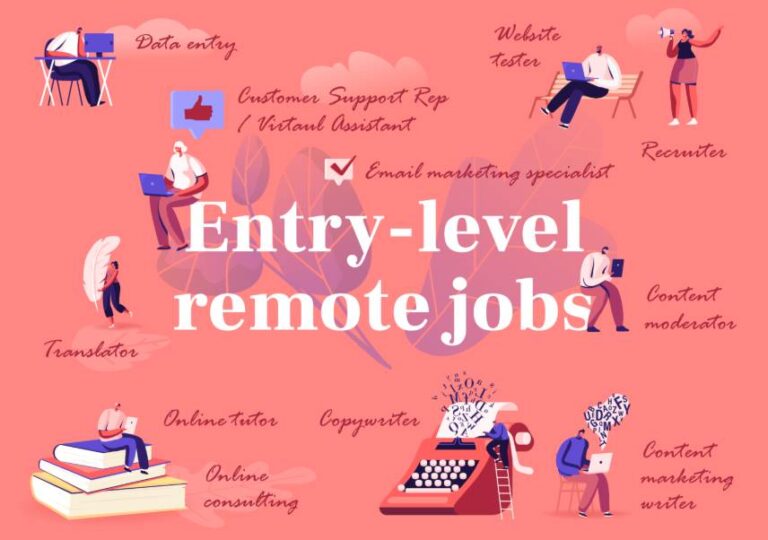
| # | Job Title | Main Tasks | Skills You Already Have | How to Get Hired (First Steps) |
|---|---|---|---|---|
| 1 | Data Entry Specialist | Type information from one place (forms, audio) into a computer system or spreadsheet. | Typing, attention to detail, and basic computer use. | 1. Practice typing speed & accuracy. 2. Learn basic Excel/Sheets formulas (free on YouTube). 3. Apply on Upwork for small tasks. |
| 2 | Customer Support Agent | Answer customer questions via email, chat, or phone. Help solve their problems. | Patience, good communication, and problem-solving. | 1. Write a friendly, clear cover letter. 2. Highlight any service experience (even retail). 3. Apply directly to companies’ career pages. |
| 3 | Virtual Assistant (VA) | Help a busy person with online tasks: manage email, schedule, and light research. | Organization, time management, and basic internet skills. | 1. List all the admin tasks you can do. 2. Offer free help to a friend’s business for a reference. 3. Create a simple service list. |
| 4 | Content Moderator | Review user-uploaded content (posts, videos) to make sure it follows website rules. | Good judgment, focus, and ability to follow guidelines. | 1. Search for “Trust & Safety” roles on LinkedIn. 2. Emphasize your responsibility and attention to detail in your application. |
| 5 | Online Tutor | Teach a subject you know well (Math, English, a language) to students over video call. | Knowledge of a subject, patience, ability to explain. | 1. Pick 1-2 subjects you are strong in. 2. Sign up on platforms like Preply or Tutor.com. 3. Set a competitive starting rate. |
| 6 | Social Media Assistant | Help schedule posts, find content to share, and reply to comments for a brand. | Familiarity with Instagram/Facebook/TikTok, basic writing. | 1. Grow your own social account a little. 2. Use free tools like Canva. 3. Show samples of engaging posts you’ve written. |
| 7 | Transcriptionist | Listen to audio files and type out everything that is said accurately. | Good listening, fast typing, good grammar. | 1. Practice with free audio files online. 2. Apply on beginner-friendly sites like Rev. 3. Start with short, easy transcripts. |
| 8 | Search Engine Evaluator | Rate websites and search results for quality and usefulness. | Ability to follow detailed instructions and an honest opinion. | 1. Apply to companies like Appen or Telus International. 2. Take their qualification tests carefully. |
| 9 | Blog / Article Writer | Write simple blog posts or articles on topics you can research. | Decent writing in English, ability to research online. | 1. Start a free blog on Medium. 2. Write 2-3 sample posts on topics you enjoy. 3. Use those samples to apply for writing gigs. |
| 10 | E-commerce Support | Help an online store with customer questions, order tracking, and basic listing updates. | Problem-solving, ability to learn a new system (like Shopify). | 1. Familiarize yourself with a platform like Shopify or Selar. 2. In your CV, highlight any customer service or selling experience. |
Your 4-Step Action Plan to Get Hired
Follow these steps to go from “no experience” to your first paycheck.
Step 1: Pick ONE Job to Focus On
Don’t apply for all ten. Look at the list and choose the one that matches your current skills and interests the most. For example, if you are a good typist, choose Data Entry. If you are great at explaining things, choose Online Tutoring.
Step 2: Build a “Proof of Skill” (Not a Fancy Resume)
Since you have no job experience, you need to show that you can do the work.
-
For Writing/VA jobs: Create 2-3 writing samples or a list of services.
-
For Tech/Support jobs: Get a free certificate from Google (like IT Support) or complete a simple online course.
-
For Social Media: Make a simple content calendar for a fake brand.
Step 3: Look in the Right Places
-
Freelance Platforms: Start on Upwork or Fiverr. Bid on small, short-term projects to get your first reviews.
-
Company Websites: Look for “Entry-Level” or “Junior” roles on the career pages of startups or tech companies.
-
Beginner-Friendly Sites: Use Rev for transcription, Preply for tutoring, or Appen for evaluation tasks.
Step 4: Write a Simple, Honest Application
Your application should be clear, not fancy.
-
Say you’re a beginner eager to learn.
-
Link directly to your “Proof of Skill” (your sample blog, your practice transcript).
-
Explain why you are reliable (e.g., “I have a stable internet connection and am available to work during these hours…”).
Conclusion
Your lack of traditional experience is not a wall; it’s just a starting point. Remote work values what you can do and your willingness to learn more than a long CV.
Begin today by choosing one job from this list and completing Step 2: creating your simple “Proof of Skill.” Your first remote job is closer than you think.
Frequently Asked Questions (FAQs)
1. How much can I really earn with no experience?
For true beginner roles, expect to earn ₦40,000 to ₦120,000 per month when starting. The goal of your first remote job is not to get rich, but to get experience, a good review, and a foot in the door. After 3-6 months of proven work, you can raise your rates or apply for higher-paying roles.
2. What is the easiest job to get first?
Data Entry and Transcription are often the easiest to get into because the skills are very specific (typing, following instructions), and you can pass a simple test to qualify. Platforms like Rev or Upwork have many small, one-time tasks perfect for a first try.
3. Will I need to pay for training or a fee to get these jobs?
NO. This is a major red flag for a scam. Legitimate companies will never ask you to pay for training, a “starter kit,” or a membership fee to get a job. You may choose to pay for a course to improve your skills, but that is your choice, not a requirement to be hired.